
Introduction
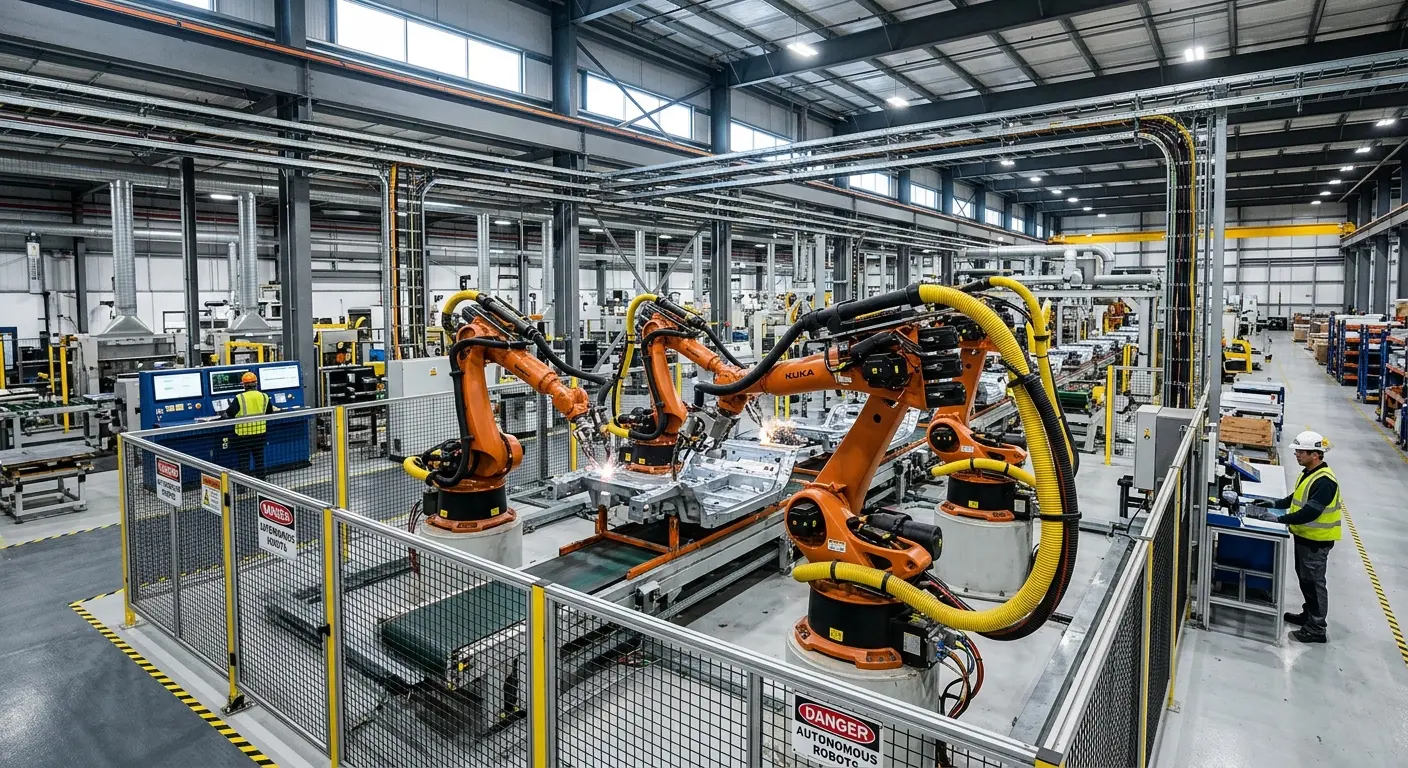
You can walk through any modern manufacturing facility, and you’ll notice that every machine depends on electrical cables and wires to operate. These cables run electricity to power motors, connect sensors, and transmit signals between control systems. In most of the industrial environments, the cables and wires are constantly exposed to vibration, bending, abrasion, sharp edges, dust, moisture and accidental impacts.
Without any proper protection, cables and wires can wear each other out much faster than expected, they can expose the inner copper or metal used to conduct electricity, leading to equipment failures, production downtime due to repair and maintenance and repairs are also expensive for machines that cost 6 or 7 figures.
This is Where a Polyamide Spiral Conduit becomes an essential part of a cable management system. Designed to protect electrical wiring in highly demanding environments, these flexible conduits help organize cables while shielding them from vibration, bending, abrasion, sharp edges, dust, moisture, accidental impacts and environmental stress.
Well Today is your lucky day if you happened to stumble upon this blog cuz, we’ll explore what a Polyamide Spiral Conduit is, how it’s made, why Polyamide (PA6) is the preferred material, and where it’s commonly used across different industries.
Lorem ipsum dolor sit amet, consectetur adipiscing elit. Ut elit tellus, luctus nec ullamcorper mattis, pulvinar dapibus leo.

What is a Polyamide Spiral Conduit?
A Polyamide Spiral Conduit, often referred to as a PA6 flexible conduit or nylon corrugated conduit, is a lightweight and flexible tube designed to protect electrical cables and wires, It’s primary purpose is to route, organize and safeguard cables from external damage while allowing enough flexibility for movement.
They are not like those old fashioned rigid electrical conduits, a Polyamide Spiral Conduit features a corrugated or spiral shaped exterior that enables the pipe to bend without breaking or easily collapsing. This makes it particularly suitable for applications where cables and wires are prone to continuous movement or vibration.
Besides protecting cables from abrasion and impact, the conduit also helps create a cleaner and more organised installation, which later is easier to identify the cables and wire for maintenance.
No matter where Polyamide Spiral Conduit is installed whether installed inside industrial machinery, electrical control panels, or automated production lines, Polyamide Spiral Conduits contribute to longer cable life and improved system reliability, so no more wire replacement, production downtime and huge maintenance cost.
How is a Polyamide Spiral Conduit Made?
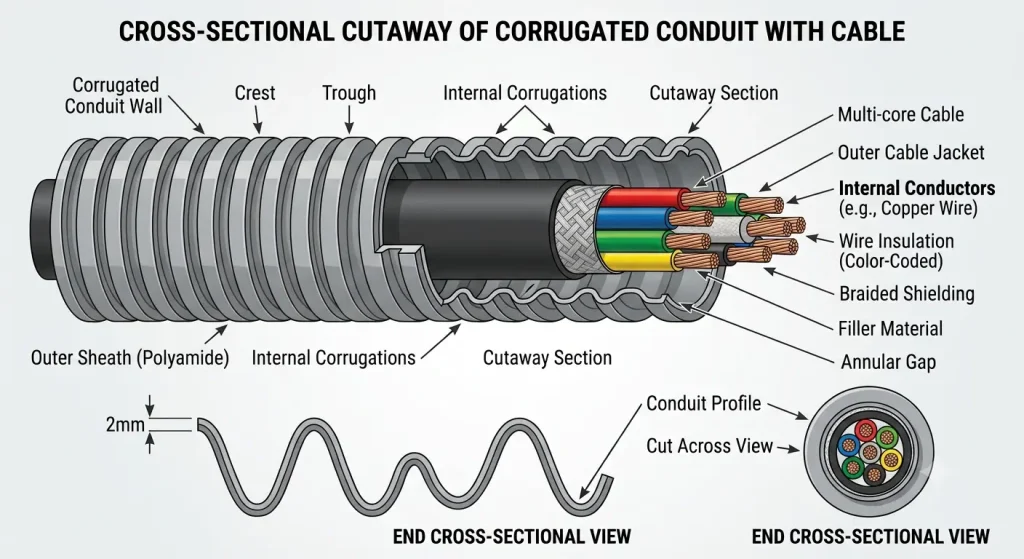
The easiest characteristics to identify Polyamide Spiral Conduit is its corrugated construction. Instead to having a smooth outer surface, the conduit is organized into evenly spread ribs and grooves that provide flexibility while maintaining excellent mechanical strength.
These ribs or corrugated profile allows the conduit to bend around corners, follow complex cable routes, and absorb repeated impacts, movements without breaking or deforming.
Although lightweight, the conduit walls are engineered to withstand mechanical stress and everyday abuse (pun intended) found in industrial environments. the internal surface is smooth unlike the outside to allow cables and wires to be pulled through with minimal resistance, reducing installation time and preventing damage during cable routing.
Polyamide Spiral Conduit has the combination of flexibility, strength and ease of installation makes the corrugated design one of the biggest advantages.
Why is Polyamide (PA6) used as the Material?
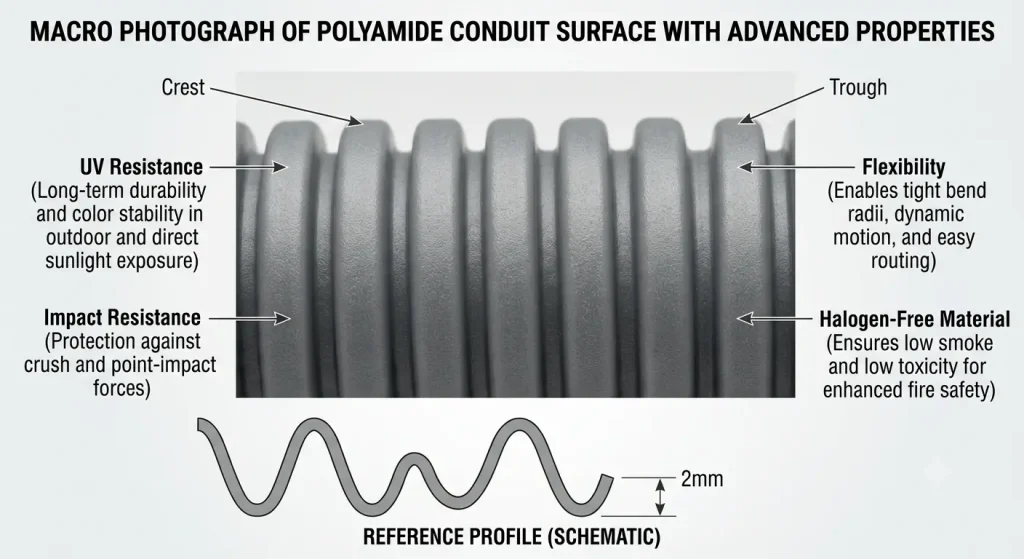
The performance of any conduit depends heavily on the material used to manufacture the conduit. Polyamide commonly known as PA6 (Nylon 6), is widely use because it offers an excellent balance of strength, flexibility and durability.
Unlike conventional plastics, PA6 maintains its mechanical properties even under demanding industrial pressure. it can endure repeated bending, resist abrasion caused by moving cables or against walls and metal, and tolerate exposure to oils, greases and many industrial chemicals.
Another more important advantage is its wide operating temperature range. It can withstand repeated friction and machines that emit heat allowing the conduit to perform reliably in both cold and hot environments. many Polyamide conduits are also halogen-free and self extinguishing, making them really suitable for installations where fire safety is an important factor.
These Properties can explain why PA6 has become one of the most trusted materials for industrial cable protection systems.
Key Features and Benefits
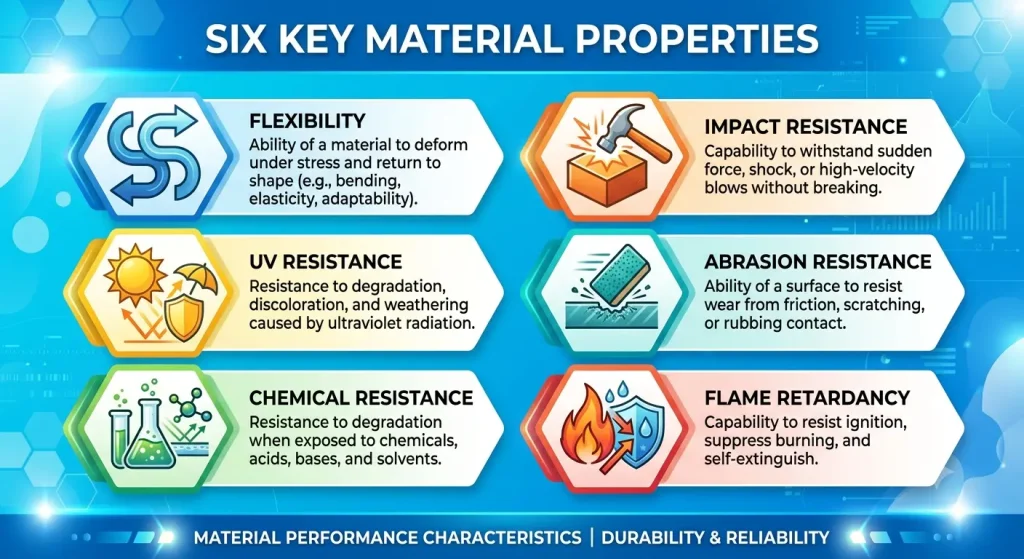
A Polyamide Spiral Conduit combines several performance characteristics that make it suitable for demanding industrial applications.
Some of its key advantages include:
- Excellent flexibility for dynamic cable movement
- High abrasion resistance to reduce cable wear
- Strong impact resistance against accidental mechanical damage
- Good UV resistance for outdoor applications
- Resistance to oils, greases, and many industrial chemicals
- Halogen-free construction for improved fire safety
- Self-extinguishing material properties
- Wide operating temperature range
- Lightweight yet mechanically strong
- Long service life with minimal maintenance
Rather than solving only specific problems, these Combined features allow a single conduit to protect cables form multiple environmental and mechanical hazards throughout its service life.
How Does a Polyamide Spiral Conduit Protect Cables?
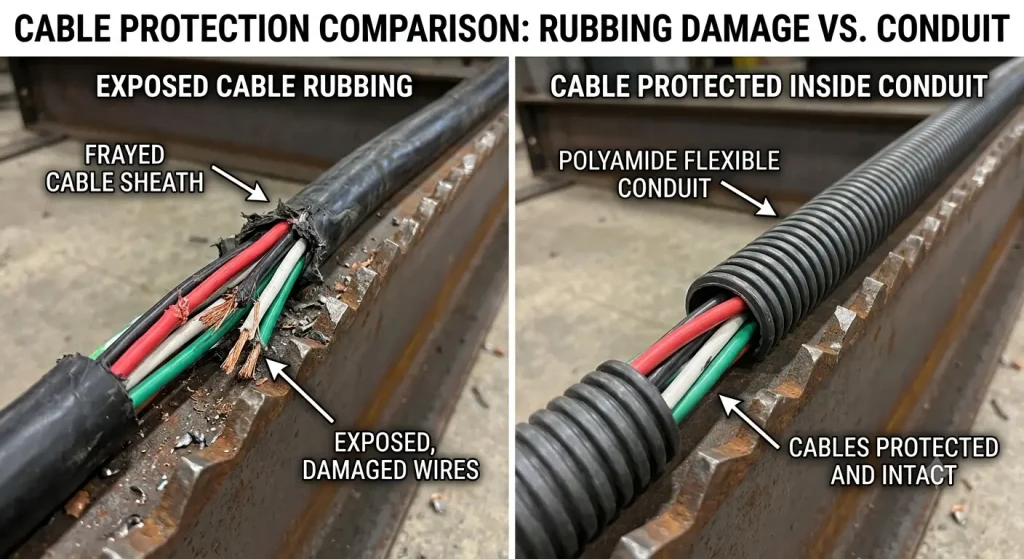
Industrial cables are not only exposed to electricity but to all kinds of environmental, physical, operational and mechanical hazards. Everyday they experience movement, vibration, friction, dust, moisture and accidental impacts, Over time, these conditions can damage cable insulation and increase the risk of electrical faults.
A Polyamide Spiral Conduit acts as a protective outer layer between the cable and it’s surroundings.
Instead of the cables rubbing directly against the walls, other cables and machinery, the conduit absorbs the friction. Instead of sharp edges damaging insulation, the conduit creates a protective barrier. In moving equipment, its flexible design allows cables to bend naturally without excessive stress.
By reducing mechanical wear, the conduit helps extend cable life while improving overall equipement reliability and reducing maintenance requirements.
Where are Polyamide Spiral Conduits Used?
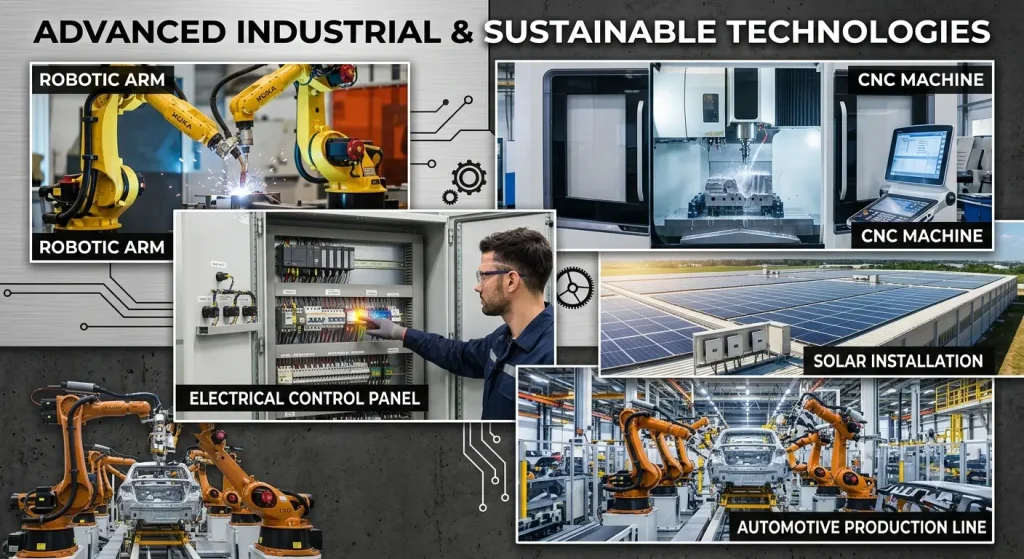
Due to their strength, flexibility and durability, Polyamide Spiral Conduits are used across a wide range of industries.
Some common applications include:
- Industrial automation systems
- Robotic arms
- CNC machining centers
- Packaging machinery
- Automotive manufacturing plants
- Conveyor systems
- Material handling equipment
- Electrical control panels
- Railway infrastructure
- Solar power installations
- Wind energy systems
- Machine tools
For example, in an automotive assembly plant, robotic arms perform thousands of repetitive movements everyday. A Polyamide Spiral Conduit protects the cables running through these arms, reducing damage caused my continuous motion and helping maintain reliable operation.
Common Sizes and Specifications
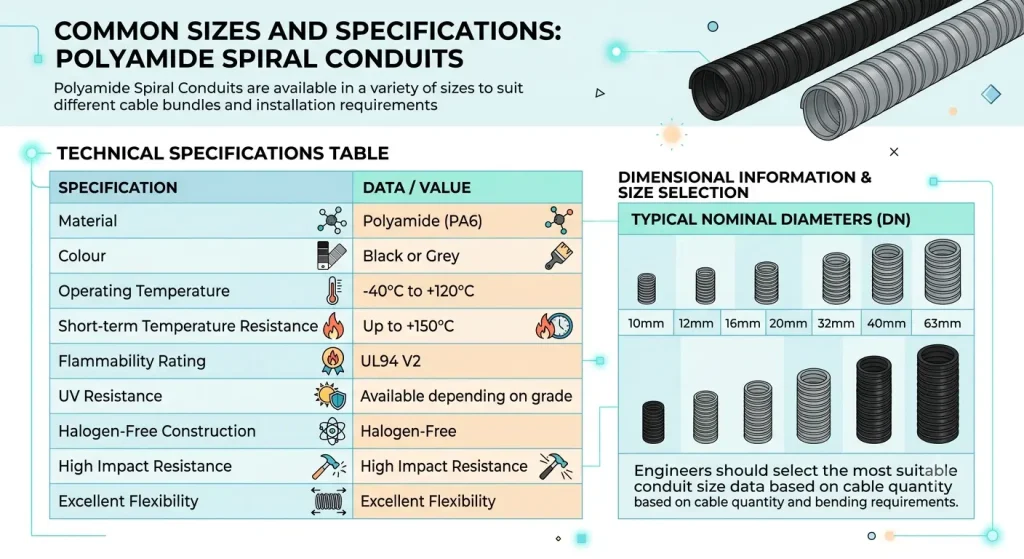
Polyamide Spiral Conduits are available in a variety of sizes to suit different cable bundles and installation requirements,
Standard specifications include:
- Material: Polyamide (PA6)
- Colour: Black or Grey
- Operating Temperature: -40°C to +120°C
- Short-term Temperature Resistance: Up to +150°C
- Flammability Rating: UL94 V2
- UV Resistance: Available depending on grade
- Halogen-Free Construction
- High Impact Resistance
- Excellent Flexibility
Manufacturers usually offer several nominal diameters, allowing engineers to select the most suitable conduit size based on cable quantity and bending requirements.
Polyamide Spiral Conduit vs PVC Conduit
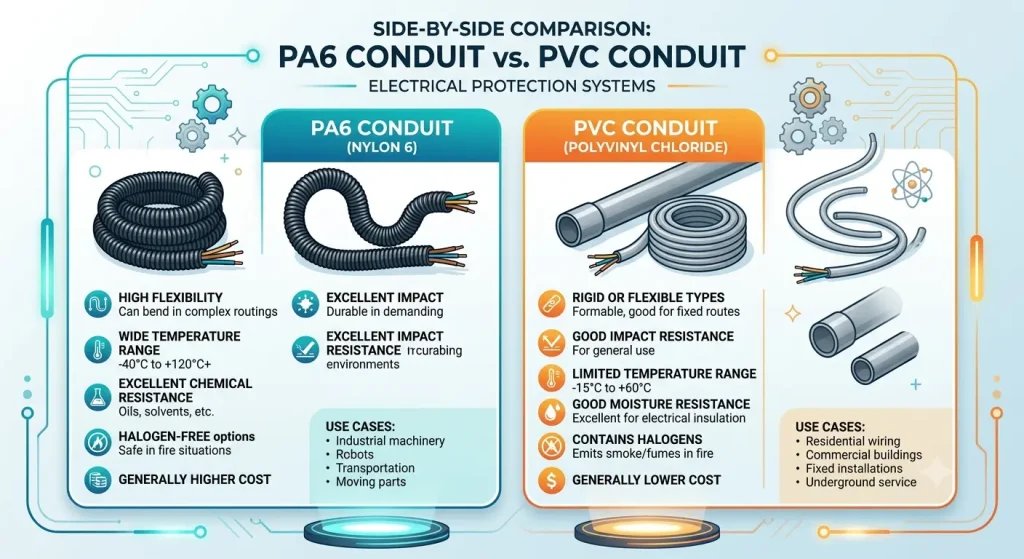
Although both of these products are used for cable protection but they are designed for different environments.
Polyamide conduits provide much greater flexibility, better impact resistance, and improved fatigue life compared to the PVC conduits.
PVC conduits on the other hand are commonly used in fixed electrical installations where movement is restricted. In comparison, Polyamide Spiral Conduits are specifically designed for usage involving repeated bending, vibration, and mechanical stress.
As industrial automation continues to increase, many manufacturers prefer Polyamide conduits because they offer better long-term performance in dynamic applications.
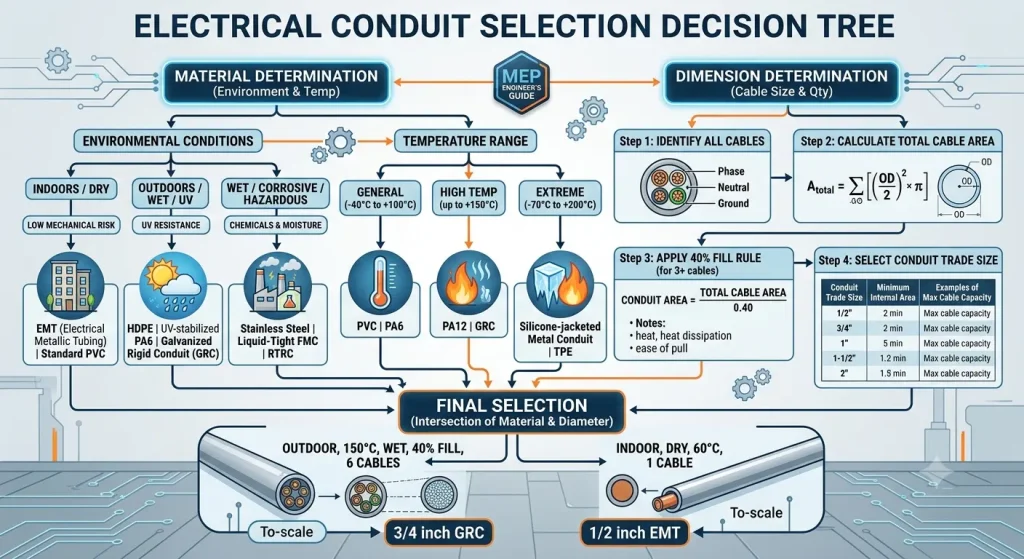
How to choose the right Polyamide Spiral Conduit
Selecting the right conduit for your application involves more than simply matching the cable diameter.
Several factors are involved and should be considered they are as follow:
- Cable bundle size
- Minimum bending radius
- Operating temperature
- Exposure to UV radiation
- Chemical exposure
- Indoor or outdoor installation
- Static or dynamic application
- Required flexibility
- Environment conditions
Choosing the right conduit helps improve installation reliability while reducing future maintenance costs.
Installation Tips
Proper installation plays a major role in maximizing the service life of both the conduit and the cables it protects.
- Some recommended practices include:
- Avoid exceeding the minimum bending radius.
- Use compatible conduit fittings and accessories.
- Do not overfill the conduit with cables.
- Secure the conduit at regular intervals.
- Inspect for damage before installation.
- Follow manufacturer recommendations for routing and fastening.
Correct installation helps maintain flexibility while ensuring cable protection over the long term.
Maintenance and Service life
Polyamide Spiral Conduits needs very little maintenance under normal operating conditions.
However, periodic inspections are recommended to check for signs of excessive wear, crushing, UV degradation, or accidental mechanical damage.
Cleaning accumulated dust and debris can also improve inspection visibility and help identify potential issues before they affect the protected cables.
With proper installation and regular inspection, Polyamide Spiral Conduits can provide many years of dependable service in demanding industrial environments.
Frequently Asked Questions (FAQs)
What is a Polyamide Spiral Conduit used for?
It is used to protect electrical cables from abrasion, impact, vibration, dust and other environmental hazards while keeping cable installations organized.
Is PA6 better than PVC?
For dynamic industrial applications involving frequent movement or bending, PA6 generally offers superior flexibility, impact resistance, and fatigue life.
Can Polyamide Spiral Conduits be used outdoors?
Yes, Given the conduit grade is UV-resistant and suitable for outdoor exposure.
Are Polyamide conduits waterproof?
The conduit itself is moisture-resistant, but the overall protection depends on the conduits fittings and installation method.
What industries commonly use these conduits?
Industrial automation, robotics, automotive manufacturing, machine building, renewable energy, railway systems, and electrical control panels are among the most common applications.
Conclusion
A Polyamide Spiral Conduit is much more than a flexible tube for routing cables, It is a critical component in modern cable protection systems, helping safeguard electrical wiring from mechanical damage, environmental exposure and continuous movement.
Its corrugated construction provides the flexibility needed for dynamic applications, while the strength of Polyamide (PA6) ensures long-lasting performance in demanding industrial environments. Whether used in robotics, Manufacturing, renewable energy, or control panels, choosing the right conduit can improve equipment reliability, reduced maintenance, and extend the service life of electrical cables.