
Introduction
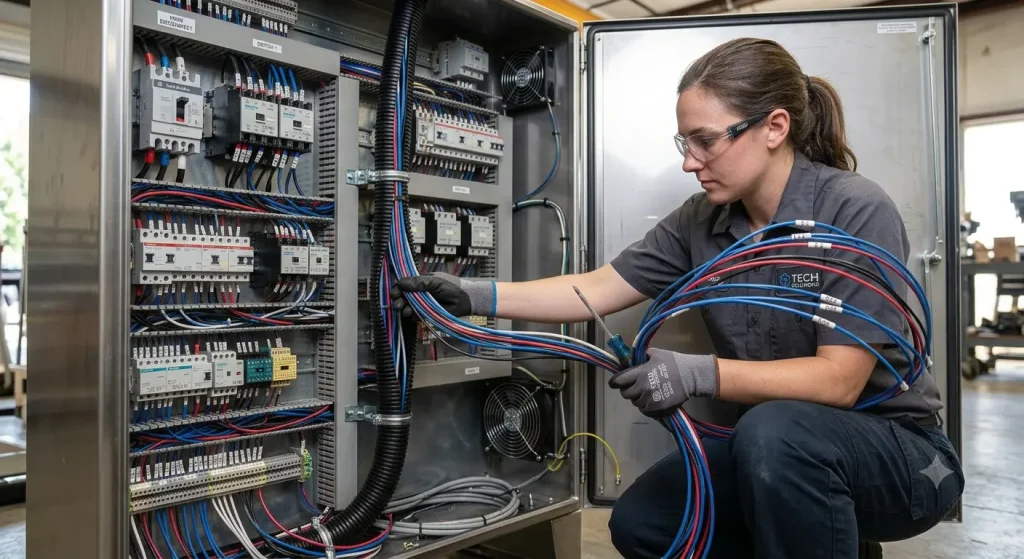
Today’s modern industrial systems depend on electrical cables to run machines, connect sensors, and transfer data between different components. Whether it’s an automated production line, an electrical control panel, or a railway signaling system, properly protecting these cables is essential for maintaining safety and reliability.
While typical conduits offer excellent cable and wire protection, they usually require cables and wires to be Pass through the conduit before installation. This can become really time consuming when you are working with existing setup or equipment’s and maybe upgrading cable systems.
A Polyamide Slit Conduit is designed to solve this problem. It’s special side-opening design allows installers to add, remove or replace cables without disconnecting existing wiring, making installation and maintenance significantly easier.
In this guide, you’ll learn what a Polyamide Slit Conduit is, how it’s constructed, why Polyamide (PA6) is the preferred material, and where it’s commonly used across industrial application. 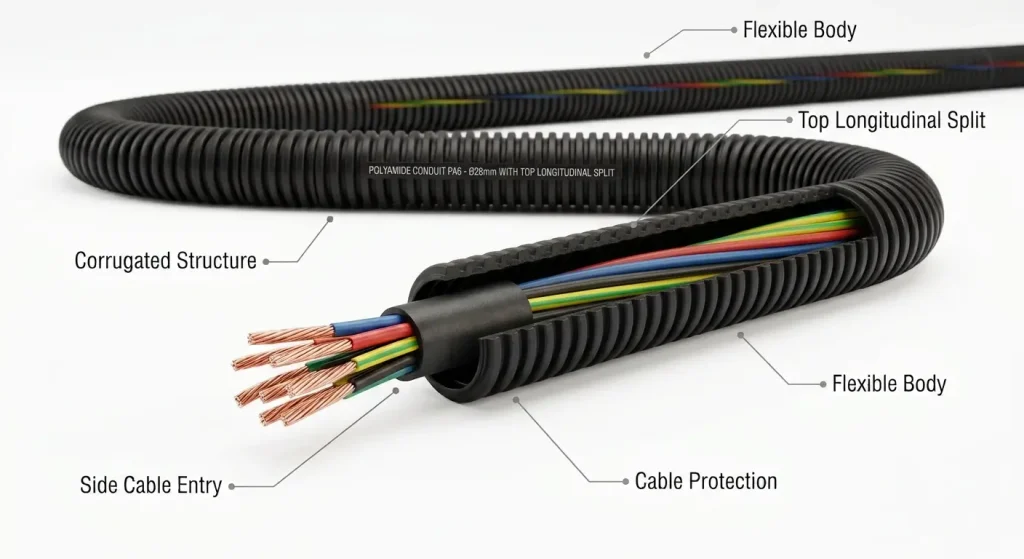
What is Polyamide Slit Conduit?
A Polyamide Slit Conduit is a flexible corrugated tube manufactured from Polyamide (PA6) that protects electrical cables from abrasion, impact, dust, and vibration while allowing quick access to cables and wires inside.
Unlike a standard spiral conduit, a slit conduit has a continuous stretch of opening running along it’s entire length. This design allow cables and wires to be installed directly through the side rather than being fed from one end of the conduit.
This feature makes slit conduit especially useful for retrofit projects, machine maintenance, cables and wire upgrades where existing wiring cannot be easily disconnected.
Besides protecting cables and wires from physical damage, the conduit also improves cable organization, reduces clutter and overcrowding of wires, and helps create a cleaner and more professional installation. 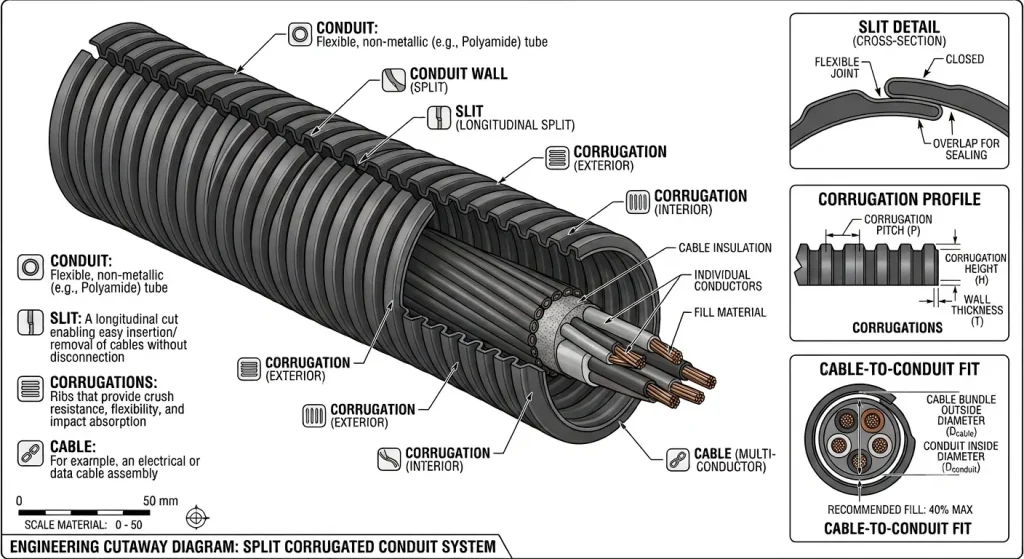
How is a Polyamide Slit Conduit Constructed?
The performance of a Polyamide Slit Conduit comes from two important design features: its corrugated structure and its continuous longitudinal slit. The corrugated profile gives the conduit excellent flexibility while maintaining enough mechanical strength to protect cables in a physically challenging environments. It allows the conduit to bend around corners and follow complex cable routes without collapsing. The longitudinal slit is the feature that sets this conduit apart. Instead of feeding cables and wires through the conduit from one end, installers can simply press cable into the side opening. This makes the cable installation faster and allows future modifications without destroying the entire cable assembly. Although the conduit includes a slit, It still provides reliable protection for cables in applications where frequent cable access is required. 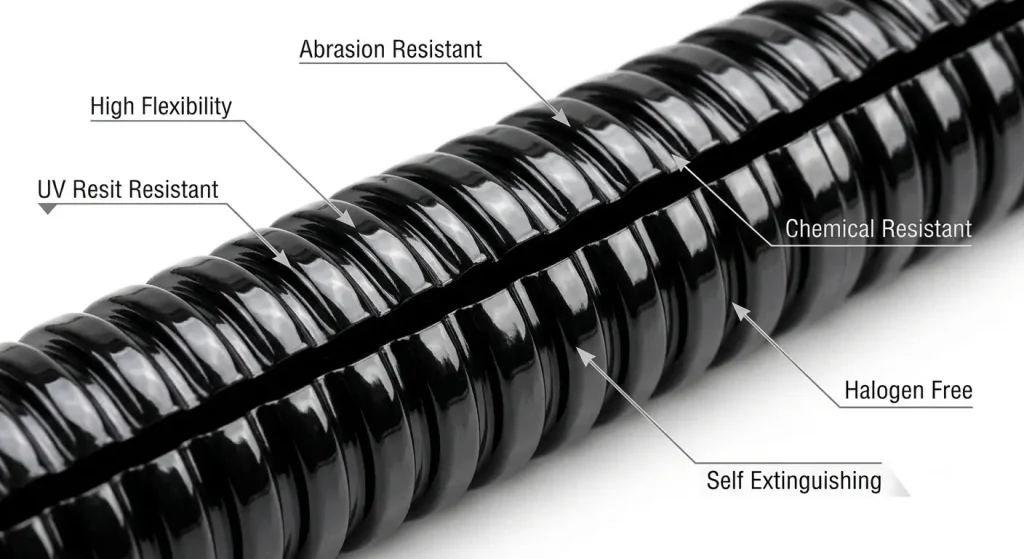
Why is Polyamide (PA6) Used as the Material?
Material selection has a major influence on the performance of any cable protection system. Polyamide, commonly known as PA6 or Nylon 6 is widely used because it provides an excellent balance of strength, flexibility, and durability. One of the biggest advantages of PA6 is its ability to withstand repeated bending without cracking or losing its shape. This makes it suitable for applications where conduits need to follow complex cable routes or accommodate little movement. Polyamide also offers excellent abrasion resistance, providing support to protect cables from friction against machinery, sharp edges, and other surfaces. It performs well in environments exposed to oils, greases, and many industrial chemicals, making it suitable for manufacturing facilities and machine-building applications. Many Polyamide conduits are also halogen-free and self extinguishing, giving an extra level of safety for electrical installations. These properties make PA6 one of the most reliable materials for industrial cable protection. 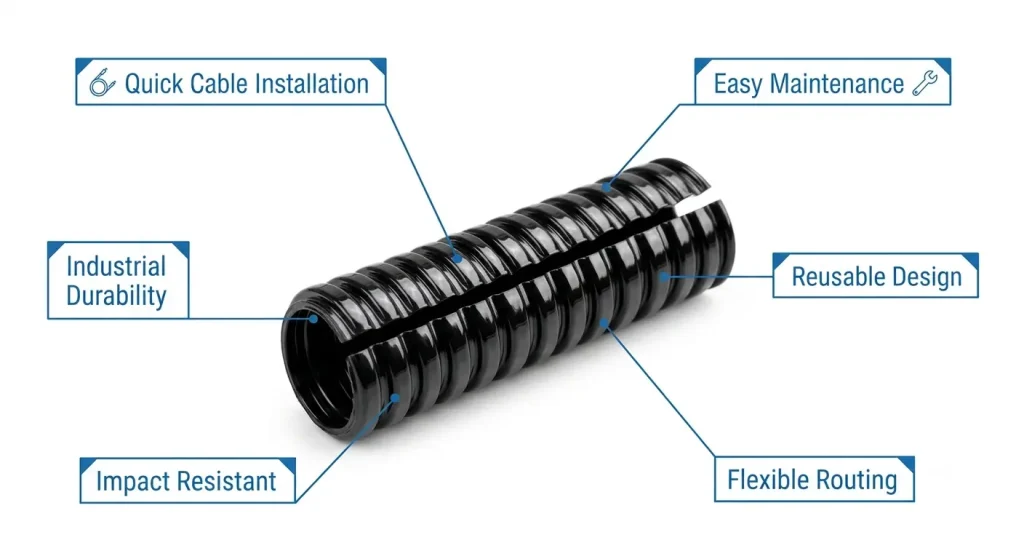
Key Features and Benefits
Polyamide Slit Conduits combine practical installation advantages with reliable cable protection, making them suitable for both new and existing electrical systems. Some of their key benefits include:
- Quick cable insertion through the side opening
- Easy cable replacement during maintenance
- No need to disconnect existing wiring
- Excellent flexibility for complex cable routing
- High resistance to abrasion and impact
- Lightweight construction
- Good resistance to oils and industrial chemicals
- Reusable design
- Improved cable organization
- Long service life
These features help reduce installation time while making future maintenance simpler and more efficient. 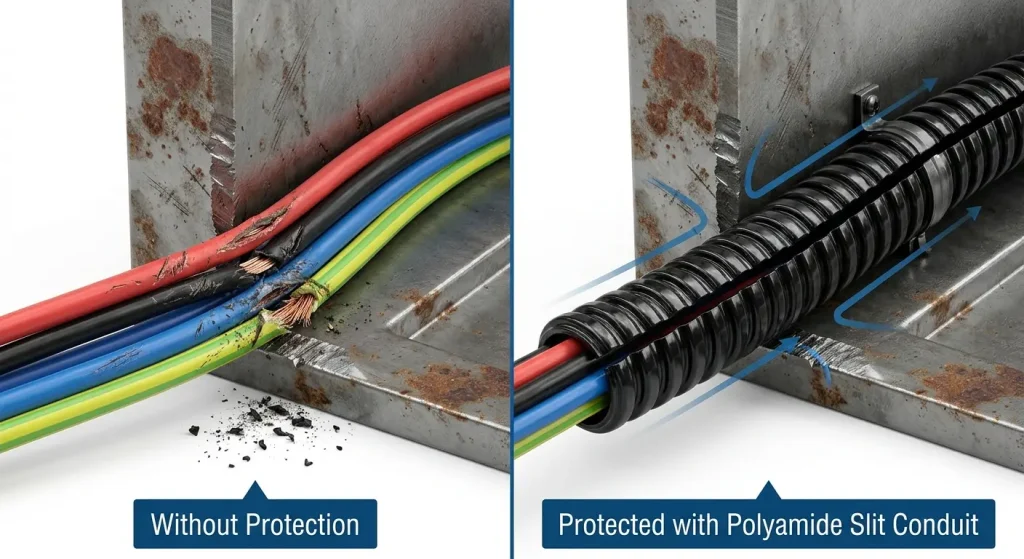
How Does a Polyamide Slit Conduit Protect Cables?
Electrical cables are constantly exposed to environmental and mechanical stresses that can slowly destroy their insulation. Dust, Vibration, Rubbing against machine frames, and accidental impacts all contribute to cable wear over time. A Polyamide Slit Conduit acts as a protective barrier between the cable and it’s surroundings. Instead of the cable coming into direct contact with abrasive surfaces, the conduit absorbs much of the mechanical wear and tear. The flexible corrugated design also allows cables to move naturally without excessive strain, while the conduit keeps multiple cables grouped together in an organized manner. Although slit conduits prioritize cable accessibility, they still provide dependable protection for many industrial uses where easy maintenance is required. 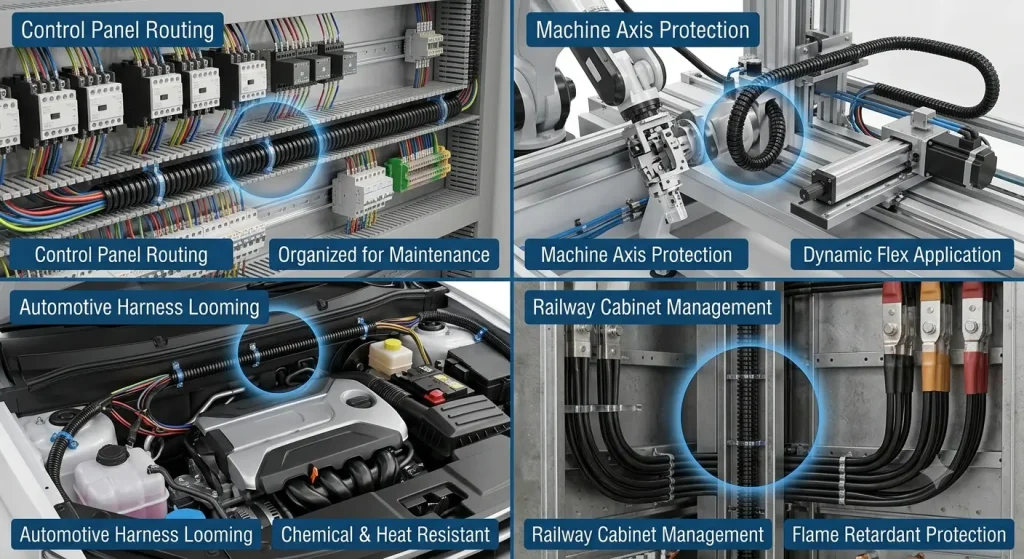
Where are Polyamide Slit Conduits Used?
Polyamide Slit Conduits are widely used in applications where cables need to be accessed, modified or replaced regularly. Some common applications include:
- Electrical control panels
- Control cabinets
- Industrial automation systems
- Machine retrofitting projects
- Automotive wiring harnesses
- Railway electrical systems
- Packaging machinery
- Material handling equipment
- Renewable energy installations
- Existing able management systems
For example, during a machine upgrade, engineers may need to install additional sensors without replacing the entire wiring system. A slit conduit allows the new cables to be added quickly while maintaining a clean and protected installation.
How to Choose the Right Polyamide Slit Conduit
Selecting the correct slit conduit requires considering more than just the cable diameter. Important factors include:
- Number of cables
- Cable bundle diameter
- Required flexibility
- Operating temperature
- Chemical exposure
- UV exposure
- Indoor or outdoor installation
- Maintenance frequency
Choosing the right conduit improves both installation efficiency and long term reliability. 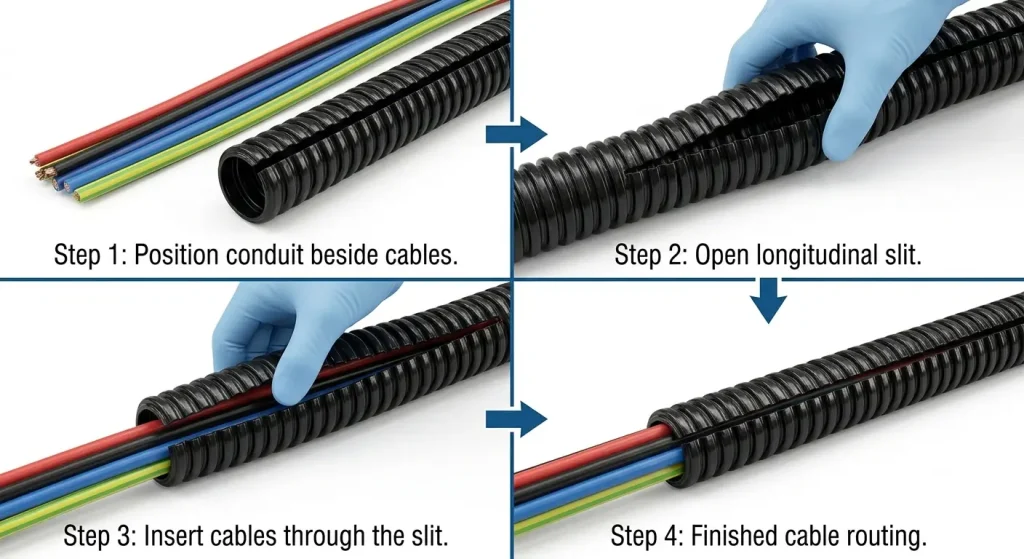
Installation Tips
Following proper installation practices helps maximize the performance and service life of a Polyamide Slit Conduit. Some recommended guidelines include:
- Do not overfill the conduit.
- Maintain the recommended bend radius.
- Secure the conduit with appropriate clamps or brackets.
- Ensure cables are fully seated inside the slit.
- Inspect the conduit for damage before installation.
- Use compatible conduit fittings where required.
Proper installation reduces cable movement, improves protection, and makes future maintenance easier. 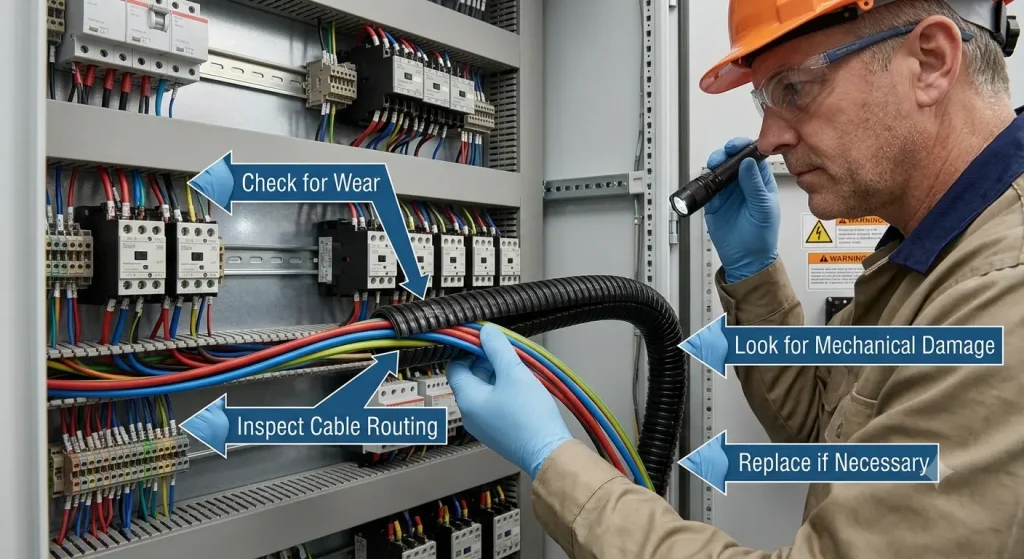
Maintenance and Service Life
Polyamide Slit Conduits require minimal maintenance but should be inspected periodically as part of routine equipment servicing. During inspections, check for:
- Excessive wear
- Cracks or deformation
- UV damage in outdoor installations
- Loose cable routing
- Mechanical damage caused by impacts
Damaged sections should be replaced promptly to maintain effective cable protection. With proper installation and regular inspection, Polyamide Slit Conduits can provide reliable performance for many years.
Frequently Asked Questions (FAQs)
What is a Polyamide Slit Conduit used for? It is used to protect electrical cables while allowing quick cable insertion and easy access for maintenance or future modifications. Can cables be added after installation? Yes. The continuous slit allows new cables to be inserted without disconnecting existing wiring. Is a Polyamide Slit Conduit suitable for outdoor use? Yes, provided a UV-resistant grade is selected for outdoor applications. Is Polyamide better than PVC? For many industrial applications, Polyamide offers better flexibility, abrasion resistance, and mechanical strength than standard PVC conduits. Can Polyamide Slit Conduits be reused? Yes, They can be reopened to add, remove, or replace cables, making them suitable for installations that require frequent modifications.
Conclusion
A Polyamide Slit Conduit offers an efficient solution for protecting electrical cables while simplifying installation and maintenance. Its corrugated design provides flexibility and durability, while the continuous side slit allows cables and wires to be added or removed without dismantling the existing wiring system. Whether used in electrical control panels, industrial automation, machine retrofits, or automotive wiring, a Polyamide Slit Conduit helps improve cable organization, reduce installation time, and protect electrical systems from everyday wear.