
Introduction
When it is about protecting electrical cables, choosing the right conduit is as important as choosing the right cable or wire itself. A well thought conduit is not only protector of cables from mechanical damage but also improves cable organization, simplifies maintenance and extends the overall life cycle of an electrical system.
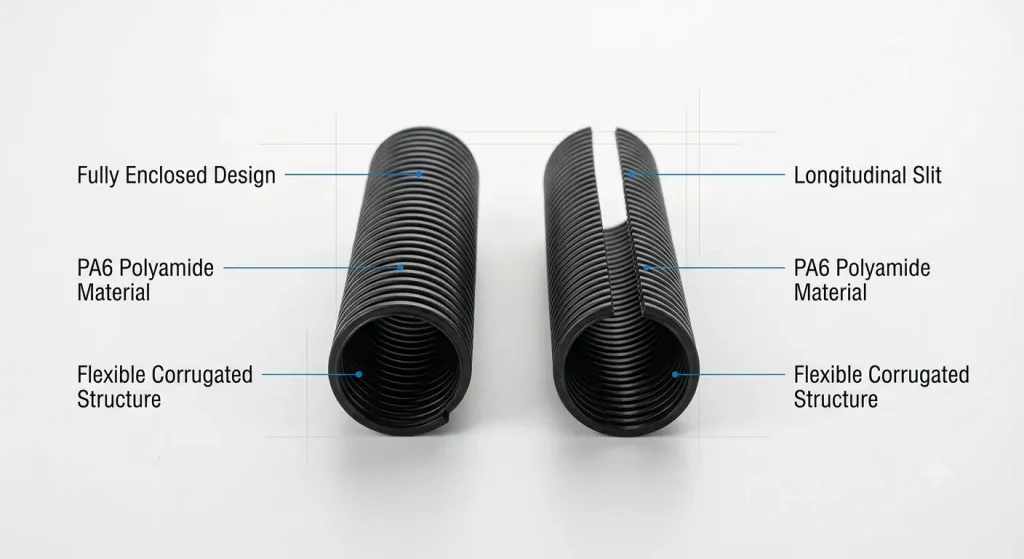
Among the many cable protection solutions available, Polyamide Spiral Conduits and Polyamide Slit Conduits are two of the most commonly used options. At first, They may look similar because both are made from durable Polyamide (PA6) and feature a corrugated design. However, they are engineered for different purposes and perform best in different applications.
Understanding the differences between these two conduit types can helpful for procurement managers, engineers, dealer, traders, machine builders, maintenance teams, and OEMs select the most suitable solution for their specific installation. In this article, we’ll compare their construction, installation, advantages, limitations and typical applications to help your decide which conduit best fits your requirements.
What is Polyamide Spiral Conduit?
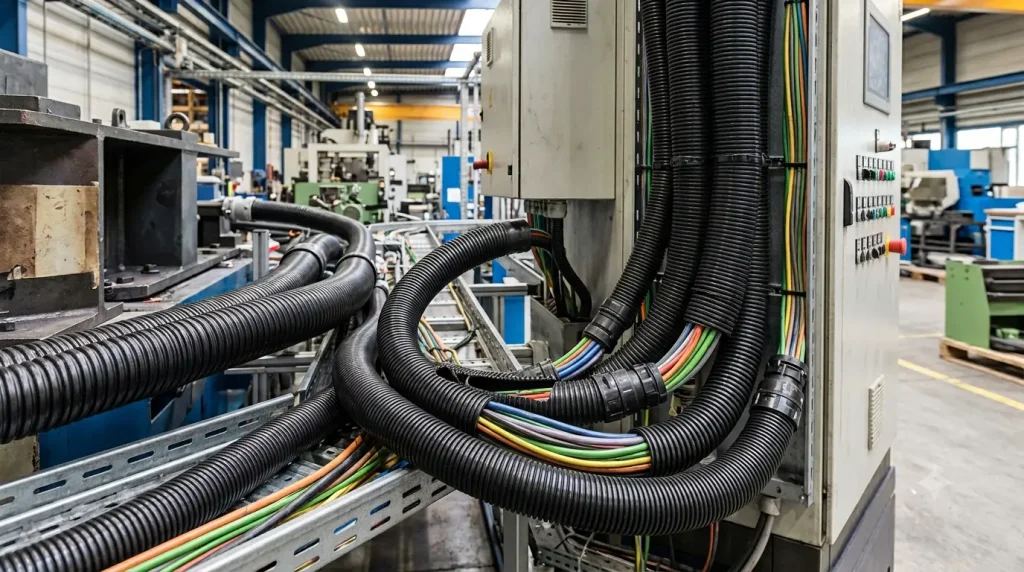
A Polyamide Spiral Conduit is a flexible corrugated tube designed to protect electrical cables and wiring from mechanical damage, vibration, abrasion, dust and environmental exposure. Manufactured from high-quality Polyamide (PA6), it combines flexibility with excellent mechanical strength, making it suitable for demanding industrial environments.
Unlike rigid conduits, its continuous corrugated construction allows it to bend easily around machinery, equipment, and tight installation spaces without collapsing. This flexibility makes it ideal for applications where cables are exposed to repeated movement or vibration, such as robotics systems, automated production line, CNC machines, and material handling equipment.
Because the conduit completely surrounds the cables, it provides reliable protection against external impacts while maintaining a neat and organized cable routing system.
What is a Polyamide Slit Conduit?
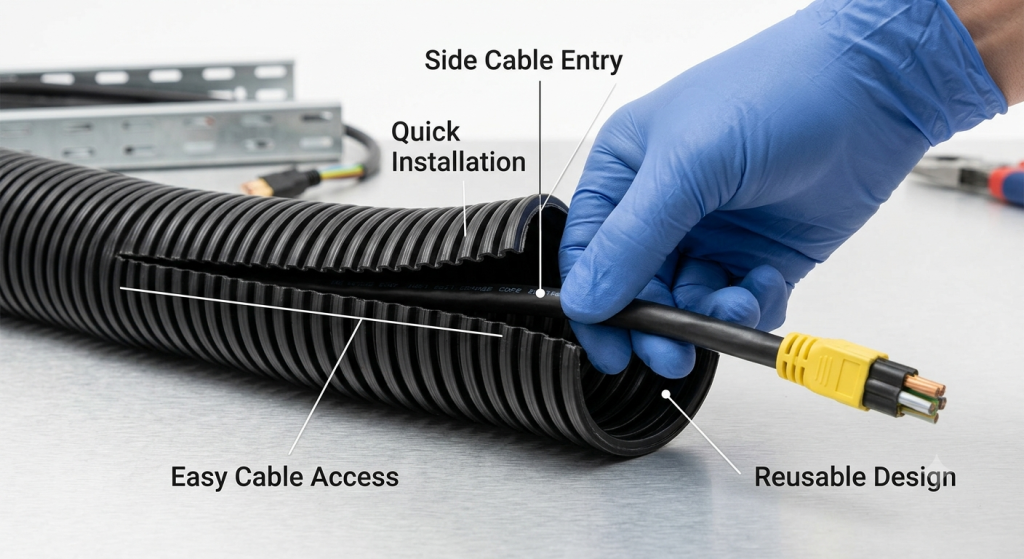
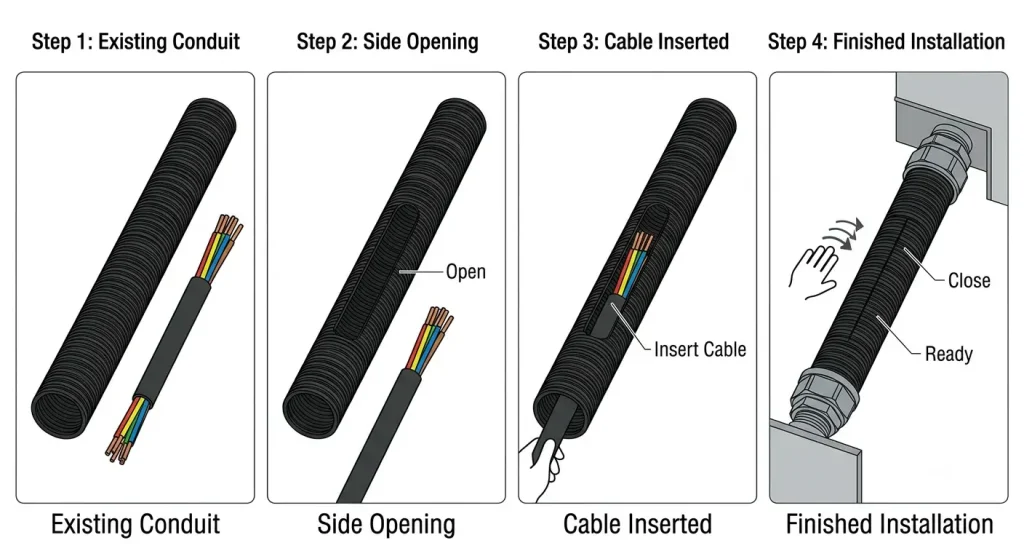
A Polyamide Slit Conduit is also a flexible corrugated cable protection tube made from PA6, but it includes a continuous slit running along its entire length. This slit allows installers to insert or remove cables or wires without disconnecting existing wiring, making it particularly useful for retrofit projects and maintenance work.
Instead of running the cables and wire through the conduit from one end, cables and wires can be simply pressed through the side opening, significantly reducing installation time.
This design makes Polyamide Slit Conduits and excellent choice for upgrading existing cable systems, organizing wiring inside electrical cabinets, and applications where cables need to be accessed or replaced regularly.
Construction Difference
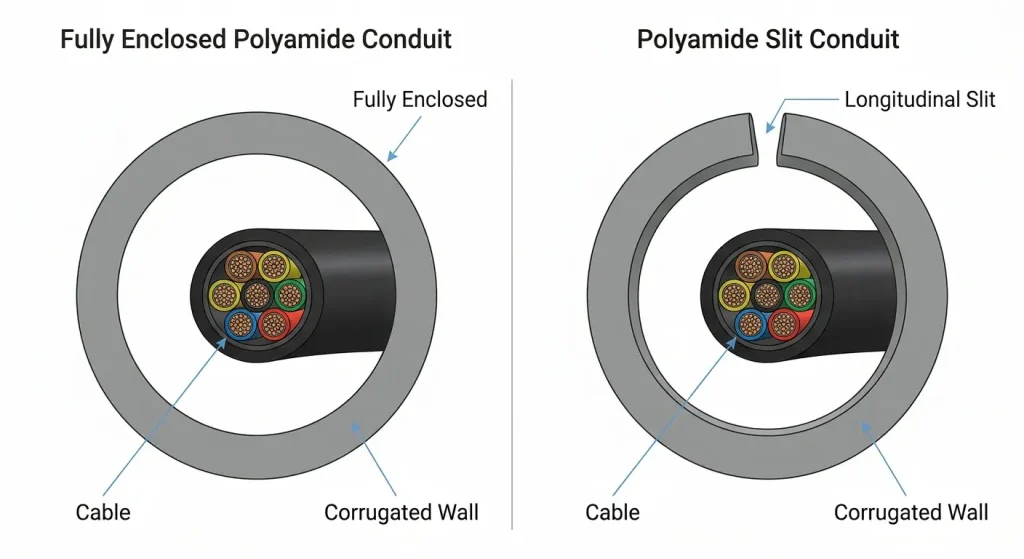
Although both conduit types are manufactured from Polyamide (PA6) and share a corrugated exterior, their construction differs in one important way.
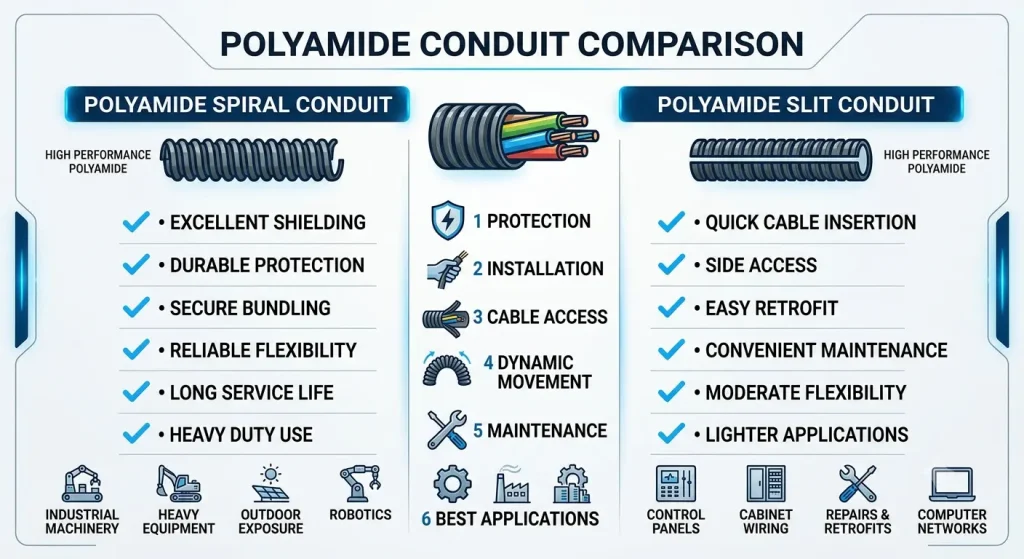
A Polyamide Spiral Conduit Features a Completely enclosed structure that surrounds cables from all the sides. This closed design provides maximum mechanical protection and is better suited for environments where cables are exposed to continuous movement, vibration, or external impacts.
A Polyamide Slit Conduit, on the other hand, includes a longitudinal slit that runs along the entire conduit. This opening allows cables to be inserted quickly without disconnecting connectors or terminals. While this design also improves accessibility and installation speed, it offers slightly less protection than a fully enclosed conduit.
The choice between the two depends on whether cable protection or cable accessibility is the higher priority.
When Should You Choose a Spiral Conduit?
A Polyamide Spiral Conduit is the preferred choice whenever cables require maximum protection from movement, vibration, and harsh industrial conditions.
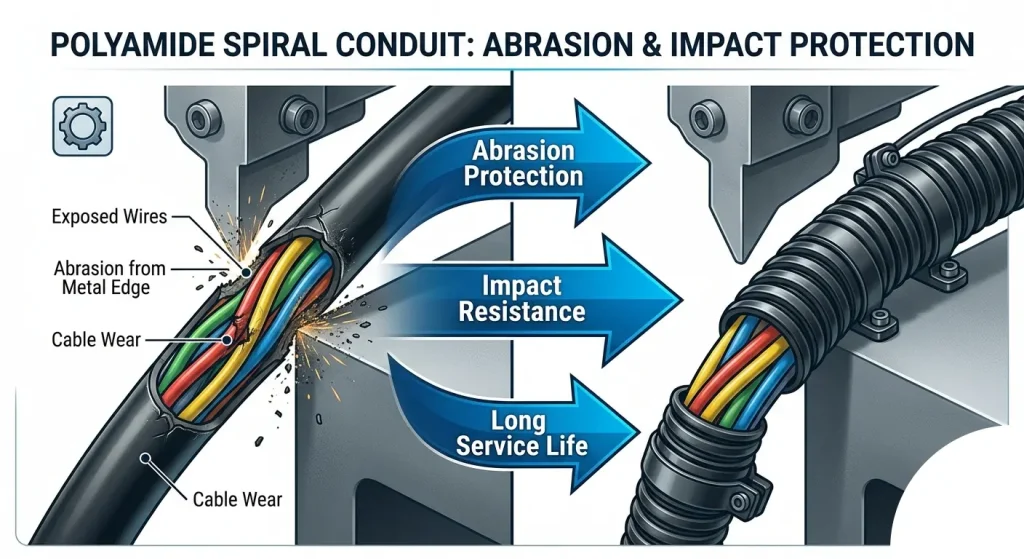
Its fully enclosed construction provides excellent resistance against abrasion, impact and repeated flexing, making it particularly suitable for applications where equipment operates continuously.
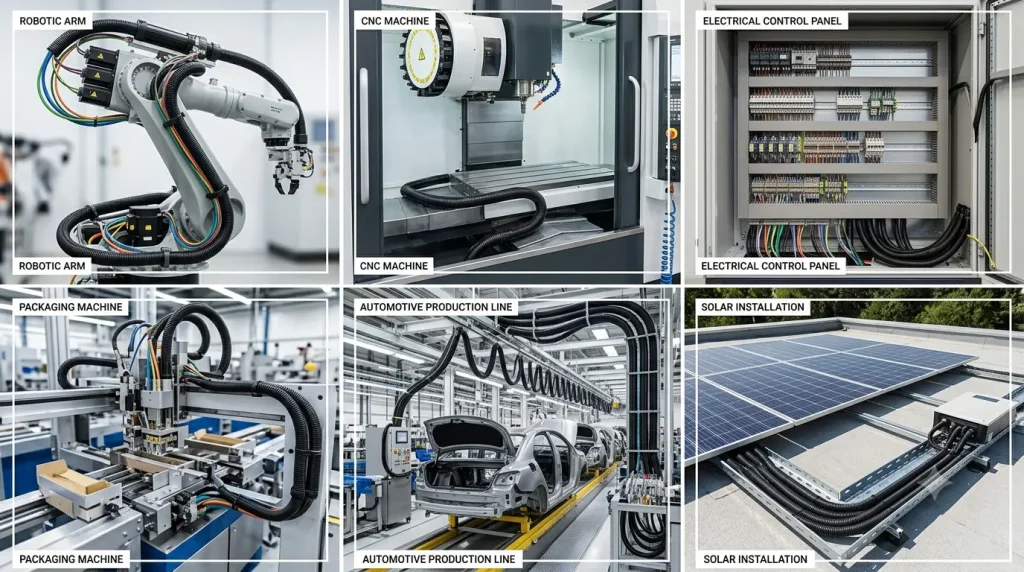
Common applications include:
- Industrial automation systems
- Robotic arms
- CNC machines
- Packaging Machinery
- Conveyor systems
- Automotive production lines
- Machine tools
- Electrical control panels
In these environments, cables are constantly exposed to motion and mechanical stress. A fully enclosed conduit helps prevent premature cable wear, reducing maintenance requirements and improving equipment reliability.
When Should You Choose a Slit Conduit?
A Polyamide Slit Conduit is best suited for applications where quick installation and easy cable access are more important than maximum mechanical protection.
Because cables can be inserted through the side opening, installers can modify existing cable systems without disconnecting wiring or removing connectors. This saves valuable time during maintenance, repairs, or equipment upgrades.
Typical applications include:
- Retrofit electrical installations
- Electrical cabinets
- Control panels
- Automotive wiring harnesses
- Railway maintenance
- Machine upgrades
- Cable Organization Projects
For maintenance teams that frequently add or replace cables, a slit conduit can significantly reduce installation time while maintaining a clean cable routing systems.
Advantages of Polyamide Spiral Conduits
Polyamide Spiral Conduits offer several advantages for demanding industrial applications.
Some of their key benefits include:
- Excellent Flexibility for dynamic cable
- movement
- High abrasion resistance
- Superior impact protection
- Better resistance to vibration
- Long service life
- High fatigue resistance
- Neat cable organization
- Suitable for harsh industrial environments
- Compatible with conduit fittings for improved sealing
These characteristics make spiral conduits the preferred choice for applications where cable reliability is critical.
Advantages of Polyamide Slit Conduits
Although slit conduits give slightly lower mechanical protection, they offer many practical benefits during installation and maintenance.
Their advantages include:
- Quick cable installation
- Easy cable replacement
- No need to disconnect existing wiring
- Reduced maintenance time
- Simple retrofit installation
- Reusable design
- Improved accessibility
- Flexible cable management
These advantages make slit conduits particularly valuable in applications where cable and wire layouts change regularly.
Which Industries Use Each Type?
Both conduit types are widely used across different industries, but their preferred applications vary depending on operational requirements.
Polyamide Spiral Conduits
- Industrial automation
- Robotics
- Automotive manufacturing
- CNC machining
- Packaging equipment
- Material handling systems
- Renewable energy
- Heavy machinery
Polyamide Slit Conduits
- Electrical maintenance
- Retrofit projects
- Control panels
- Railway systems
- Automotive wiring
- Electrical cabinets
- Commercial buildings
- Equipment upgrades
Choosing the appropriate conduit ensures that the cable protection system matches the operating conditions and maintenance requirements of the installation.
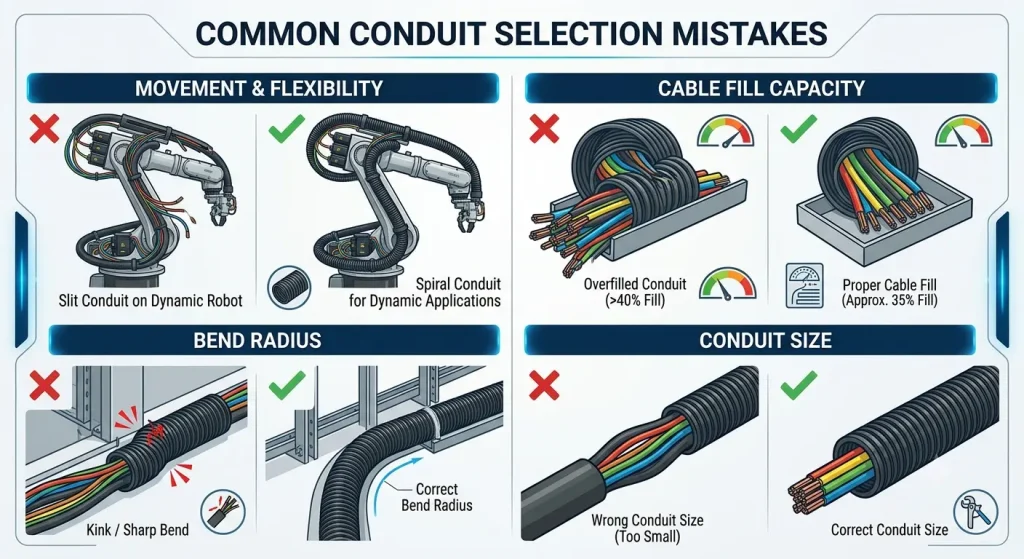
Common Mistakes When Choosing a Conduit
Choosing the wrong conduit can reduce cable life and increase maintenance costs.
Some common mistakes include:
Using a slit conduit in applications with continuous movement. While slit conduits are convenient for maintenance, they may not provide the same type of protection required in highly dynamic environments.
Ignoring the minimum bend radius. this is really important, excessive bending can damage both the conduit and the cables inside.
Selecting the wrong conduit size. An undersized conduit makes cable installation difficult, while an oversized conduit allows unnecessary cable movement.
Overfilling the conduit. Too many cables inside a conduit can increase friction, reduce heat dissipation, and complicate future maintenance.
Choosing based only on cost. A lower-priced conduit may not provide the durability required for industrial applications, potentially leading to higher maintenance expenses over time.
Frequently Asked Questions
Is a Polyamide Spiral Conduit stronger than a Slit Conduit?
Yes. because it has fully enclosed construction, a Polyamide Spiral Conduit generally provides better mechanical protection and is more suitable for demanding industrial environments.
Which conduit is easier to install?
A Polyamide Slit Conduit is typically easier to install in existing cable systems because cables can be inserted through the side opening without disconnecting connectors.
Which conduit is better for moving machinery?
Polyamide Spiral Conduits are generally preferred for moving machinery because they offer better resistance to repeated abuse, bending, vibration, and mechanical stress.
Can both conduits be used outdoors?
Yes, provided the selected Polyamide grade is UV-resistant and appropriate fittings are used for the installation.
Can Slit Conduits be reopened after installation?
Yes. One of the main advantages of slit conduit is that they can be reopened to add, remove, or replace cables without dismantling the entire cable routing system.
Conclusion
Both Polyamide Spiral Conduits and Polyamide Slit Conduits are designed to protect electrical cables, but they solve different problems.
If your application involves continuous movement, vibration, or demanding industrial conditions, a Polyamide Spiral Conduit is generally the better choice due to its fully enclosed design and higher mechanical protection.
If your Priority is quick installation, easy maintenance, or modifying existing cable systems without disconnecting wiring, a Polyamide Slit Conduit offers greater convenience and flexibility.
Instead of asking which conduit is better overall, the more practical question is which conduit better suits your application. By considering factors such as cable accessibility, operating conditions, maintenance frequency, and mechanical protection requirements, you can select a solution that improves reliability while reducing long-term maintenance cost.